> For the complete documentation index, see [llms.txt](https://docs.higiocloud.vn/llms.txt). Markdown versions of documentation pages are available by appending `.md` to page URLs; this page is available as [Markdown](https://docs.higiocloud.vn/hi-gio-user-guide-vn/network/3.-load-balancer/tao-pool-trong-load-balancing.md).
# Tạo Pool trong Load Balancing
## Quy trình
* **Bước 1**: Đăng nhập vào HI GIO PORTAL với quyền Organization Administrator và điều hướng đến
**Networking** > **Edge Gateway** > **Load Balancer** > **Pool**.
* **Bước 2**: Nhấn **ADD** để tạo và cấu hình một load balancer pool.
{% tabs %}
{% tab title="1. Tạo pool cho ứng dụng không mã hóa" %}
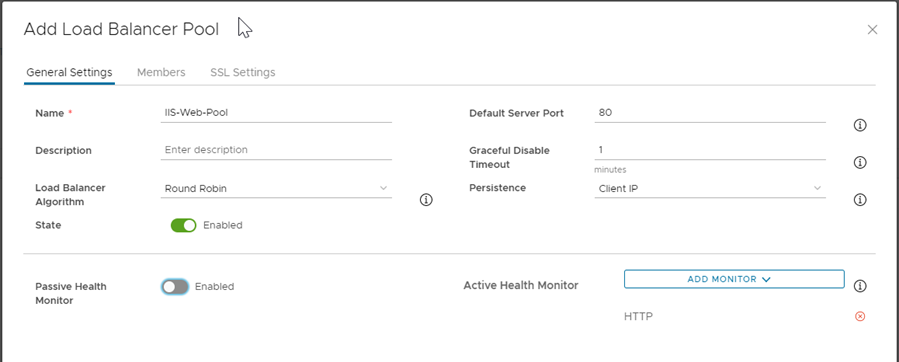
**General Settings Tab:**
* ***Name:*** nhập tên pool (ví dụ IIS-Web-Pool)
* ***Default Server Port:*** Cổng máy chủ đích được sử dụng bởi lưu lượng gửi đến các thành viên (ví dụ 80)
* ***Load Balancer Algorithm:*** (ví dụ Round Robin*)*
NSX ALB hỗ trợ các phương pháp cân bằng tải khác nhau:
*Consistent Hash*
*Core Affinity*
*Fastest Response*
*Fewest Servers*
*Least Connections*
*Least Load*
*Round Robin*
* ***Persistence:** Profile* persistence sẽ đảm bảo rằng người dùng giữ kết nối với cùng một máy chủ trong một khoảng thời gian mong muốn (ví dụ: Client IP)
NSX ALB hỗ trợ các loại **Persistence** khác nhau:
*System-Persistence-App-Cookie*
*System-Persistence-Client-IP*
*System-Persistence-Custom-HTTP-Header*
*System-Persistence-HTTP-Cookie*
*System-Persistence-TLS*
* ***Active Health Monitor:*** (ví dụ HTTP - Điều này sẽ gửi các yêu cầu HEAD HTTP định kỳ tới mỗi máy chủ trong Pool để kiểm tra tính khả dụng)
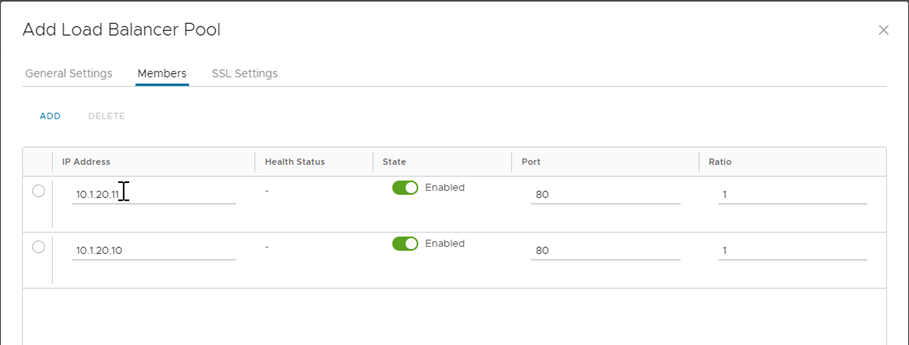
* Thêm hai hoặc nhiều mục trong tab **Members** và nhập Địa chỉ IP và Port từ các VM chạy các máy chủ ứng dụng.
* Nhấn **SAVE** để tạo một pool không mã hóa (non-encrypted)
{% endtab %}
{% tab title="2. Create a pool for encrypted application" %}
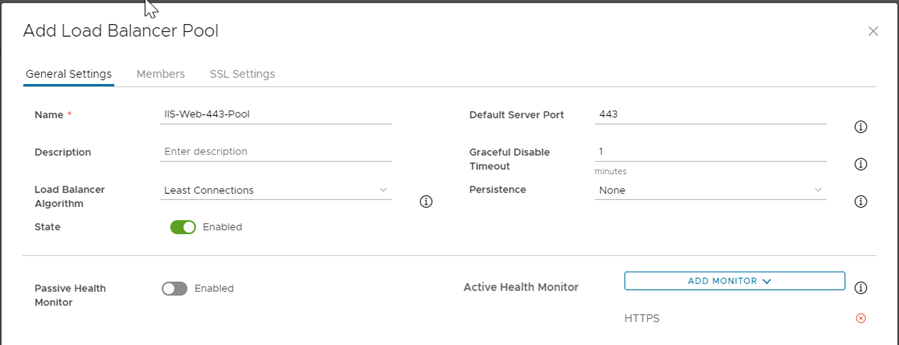
**General Settings Tab:**
* ***Name:*** nhập tên pool (ví dụ IIS-Web-Pool)
* ***Default Server Port:*** Cổng máy chủ đích được sử dụng bởi lưu lượng gửi đến các thành viên (ví dụ 443)
* ***Load Balancer Algorithm:** (*ví dụ *Round Robin)*
NSX ALB hỗ trợ các phương pháp cân bằng tải khác nhau:
*Consistent Hash*
*Core Affinity*
*Fastest Response*
*Fewest Servers*
*Least Connections*
*Least Load*
*Round Robin*
* ***Persistence:** Persistence profile* sẽ đảm bảo rằng người dùng giữ kết nối với cùng một máy chủ trong một khoảng thời gian mong muốn (ví dụ: Client IP)
NSX ALB hỗ trợ các loại Persistence khác nhau:
*System-Persistence-App-Cookie*
*System-Persistence-Client-IP*
*System-Persistence-Custom-HTTP-Header*
*System-Persistence-HTTP-Cookie*
*System-Persistence-TLS*
* ***Active Health Monitor:*** (ví dụ HTTPS - Điều này sẽ gửi các yêu cầu HEAD HTTPS định kỳ tới mỗi máy chủ trong Pool để kiểm tra tính khả dụng)
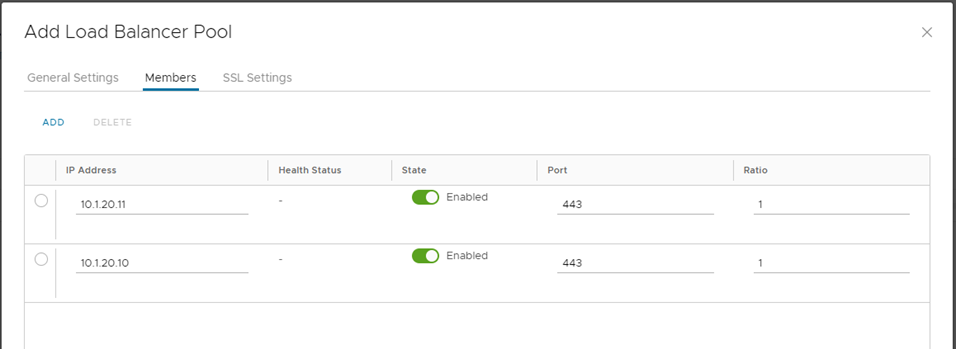
* Thêm hai hoặc nhiều mục trong tab **Members** và nhập Địa chỉ IP và Port từ các VMs chạy các máy chủ ứng dụng.
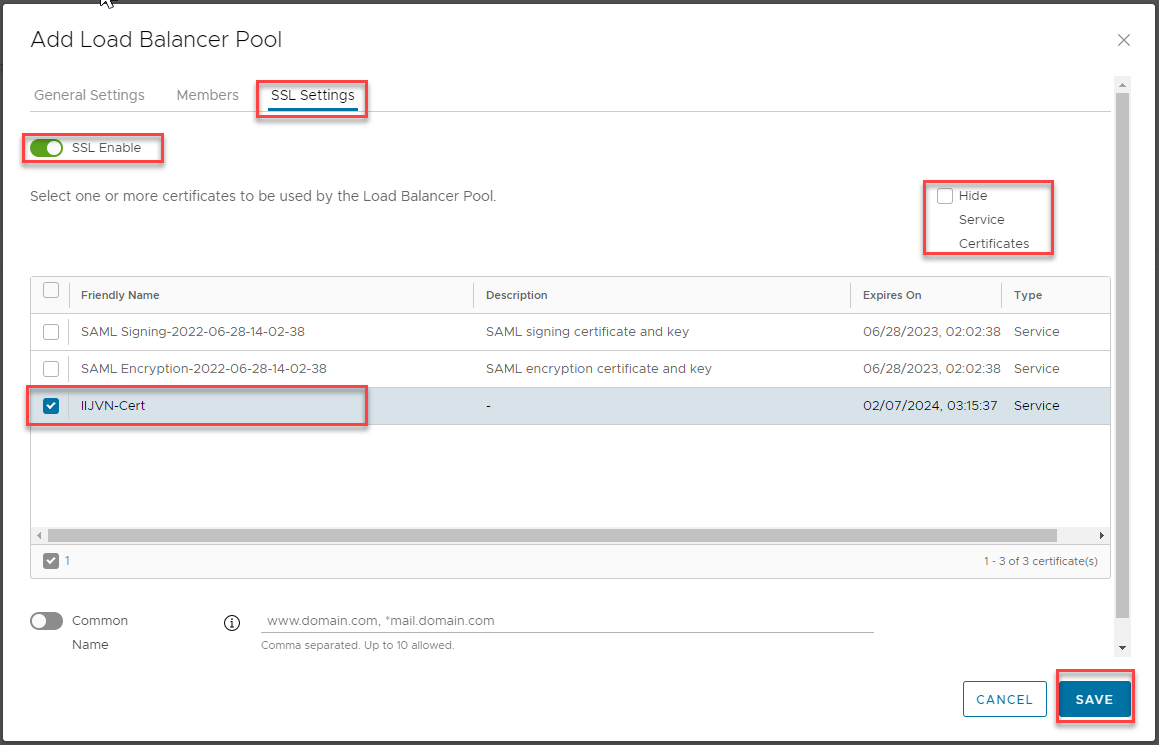
**Tab Cài đặt SSL**:
* ***SSL Enable:*** Bật
* ***Hide Service Certificates:*** Tắt
* ***Select one or more certificates to be used by the Load Balancer Pool:*** Chọn chứng chỉ của bạn
* Nhấn **SAVE** để tạo một pool mã hóa.
{% endtab %}
{% endtabs %}
{% hint style="success" %}
#### **Default Active Health Monitor:**
{% endhint %}
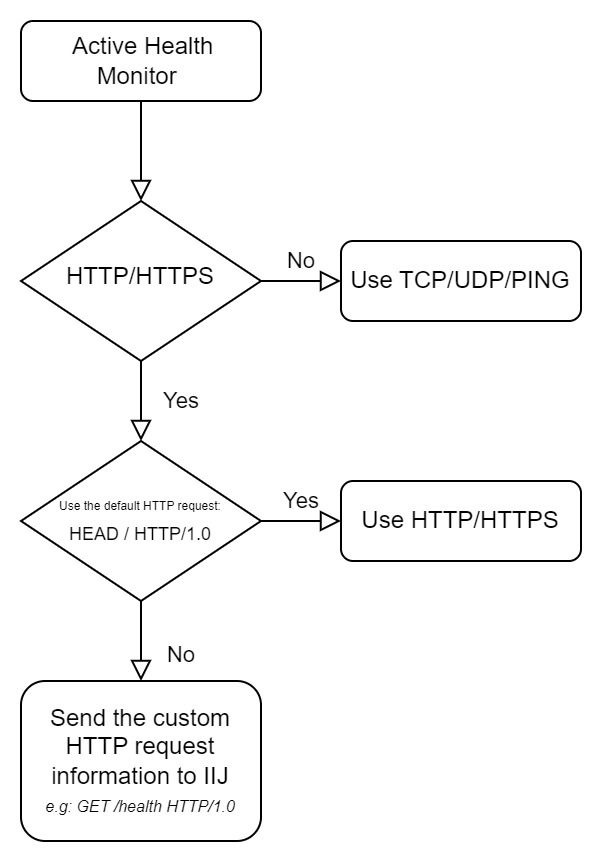
Active Health Monitor Flow
* **HTTP/HTTPS:**
* Send Interval: 10s
* Receive Timeout: 4s
* Successful Checks: 3
* Failed Checks: 3
* Health Monitor Port: use the Default Server Port of the pool.
* HTTP request: HEAD / HTTP/1.0
* Response Code: 2xx, 3xx
* **TCP**:
* Send Interval: 10s
* Receive Timeout: 4s
* Successful Checks: 2
* Failed Checks: 2
* Health Monitor Port: use the Default Server Port of the pool.
* **UDP:**
* Send Interval: 4s
* Receive Timeout: 2s
* Successful Checks: 2
* Failed Checks: 2
* Health Monitor Port: use the Default Server Port of the pool.
* **PING:**
* Send Interval: 10s
* Receive Timeout: 4s
* Successful Checks: 2
* Failed Checks: 2
---
# Agent Instructions
This documentation is published with GitBook. GitBook is the documentation platform designed so that both humans and AI agents can read, navigate, and reason over technical content effectively. Learn more at gitbook.com.
## Querying This Documentation
If you need additional information that is not directly available in this page, you can query the documentation by asking a question.
Perform an HTTP GET request on the following URL with the `ask` and `goal` query parameters:
```
GET https://docs.higiocloud.vn/hi-gio-user-guide-vn/network/3.-load-balancer/tao-pool-trong-load-balancing.md?ask=&goal=
```
`ask` is the immediate question: it should be specific, self-contained, and written in natural language.
`goal` is what the user is ultimately trying to achieve, the reason they need the answer. Sharing it helps GitBook give you a better, more relevant answer. A goal is most helpful when it describes the outcome the user wants rather than restating the question. For example, with `ask=how do I create an API token`, a goal like `automate deployments from our CI pipeline` lets GitBook tailor the answer to that use case.
The response will contain a direct answer to the question and relevant excerpts and sources from the documentation.
Use this mechanism when the answer is not explicitly present in the current page, you need clarification or additional context, or you want to retrieve related documentation sections.