> For the complete documentation index, see [llms.txt](https://docs.higiocloud.vn/llms.txt). Markdown versions of documentation pages are available by appending `.md` to page URLs; this page is available as [Markdown](https://docs.higiocloud.vn/hi-gio-user-guide-vn/hi-gio-draas/stretching-layer-2-networks-cho-hi-gios-draas/trien-khai-nsx-autonomous-edge-on-premises-site-..md).
# Triển khai NSX Autonomous Edge (on-premises site).
## **Tổng quan**
Các site on-premises hoặc L2 VPN của khách hàng yêu cầu một appliance **VMware® NSX Edge™** được cấu hình đặc biệt gọi là autonomous edge. Triển khai NSX Autonomous Edge appliance bằng tệp OVF trên host ESXi.
**NSX Edge autonomous** rất dễ triển khai và cung cấp một VPN hiệu suất cao. NSX Edge autonomous được triển khai bằng tệp OVF. Bạn cũng có thể kích hoạt high availability (HA) để tăng cường khả năng chịu lỗi cho VPN bằng cách triển khai các máy khách L2 VPN autonomous Edge chính và phụ.
*Vui lòng yêu cầu nhóm HI GIO cung cấp tệp OVF.*
## Quy trình
{% stepper %}
{% step %}
**Bước 1**: Đăng nhập vào vCenter Server.
{% endstep %}
{% step %}
**Bước 2**: Chọn **Hosts and Clusters**. Mở rộng các cluster để hiển thị các host khả dụng.
{% endstep %}
{% step %}
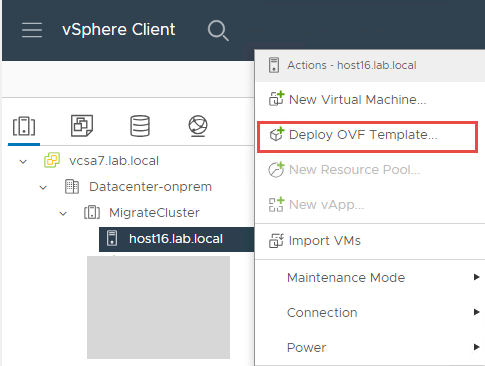
**Bước 3**: Để triển khai NSX Edge, nhấp chuột phải vào host nơi bạn muốn triển khai và chọn **Deploy OVF Template**.
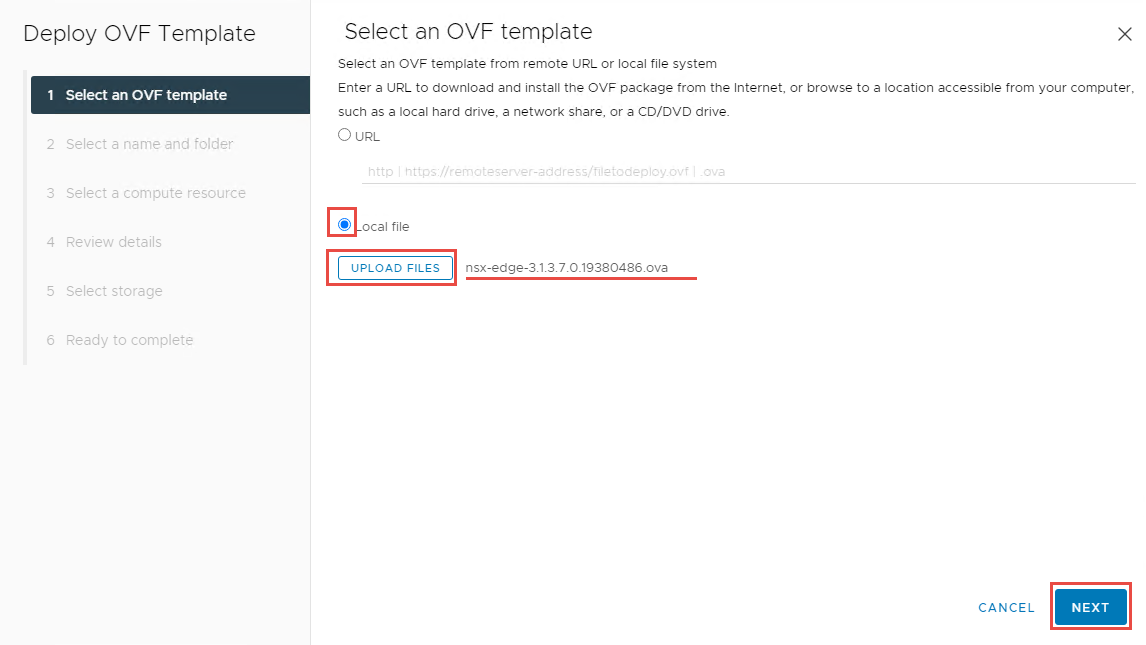
* **Trên trang Select an OVF template**, để tải xuống và triển khai tệp OVF, dán URL hoặc chọn tệp OVF đã tải về > nhấp **Next**.
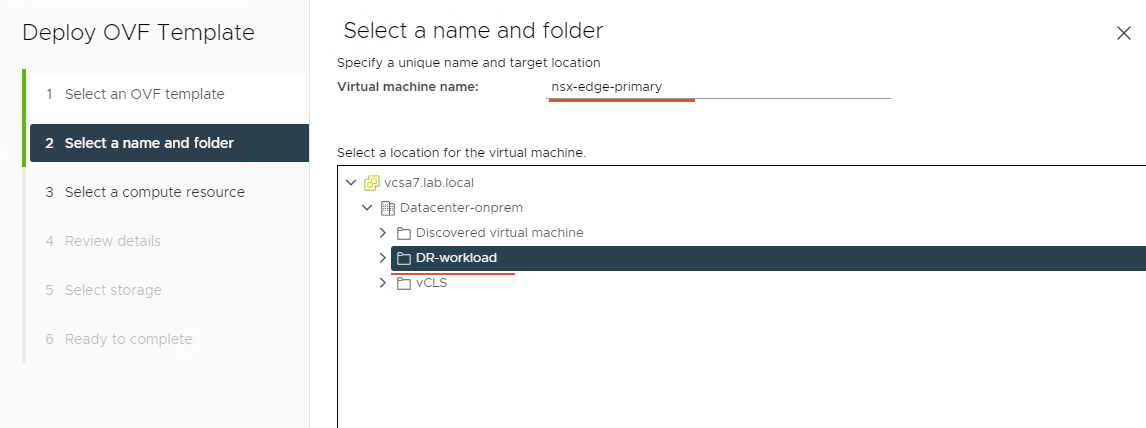
* Trên trang **Select a name and folder**, nhập tên máy ảo và chọn vị trí cho nó > nhấp **Next**.
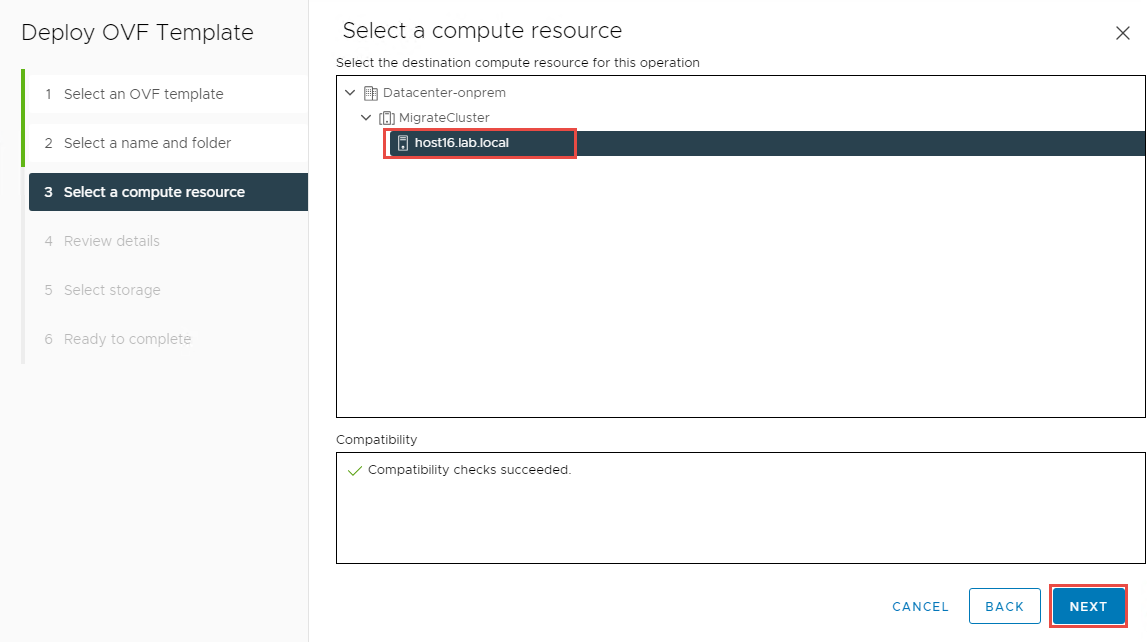
* Chọn tài nguyên compute đích > nhấp **Next** trên trang **Select a compute resource**.
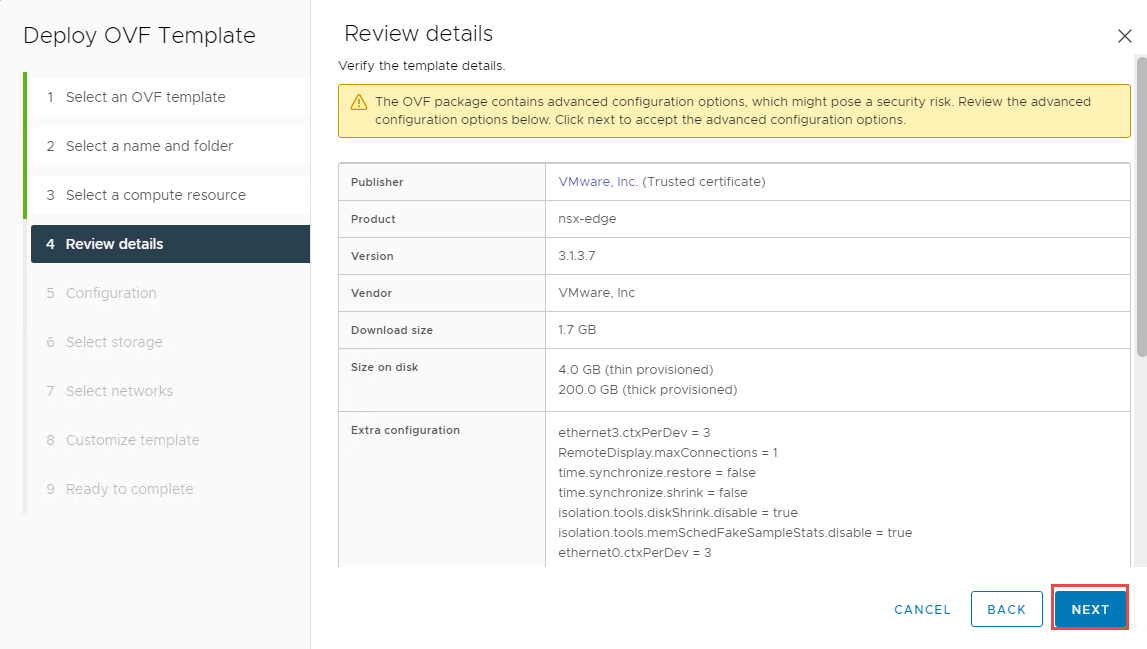
* Trên trang **Review details**, xác minh chi tiết mẫu tệp OVF > nhấp **Next**.
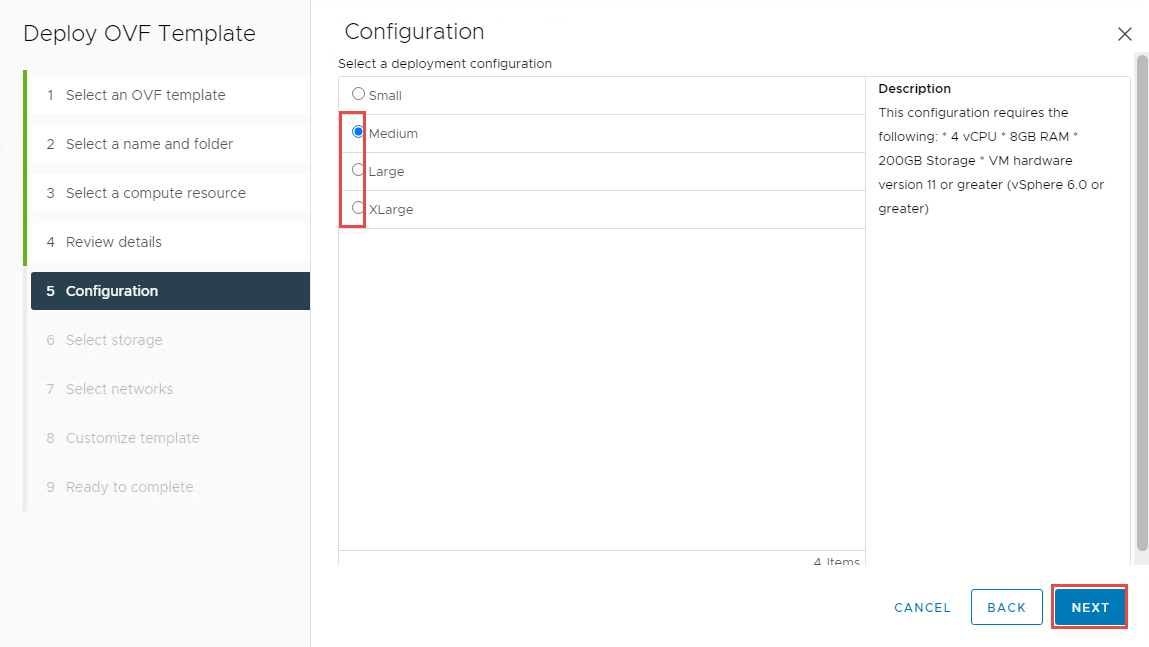
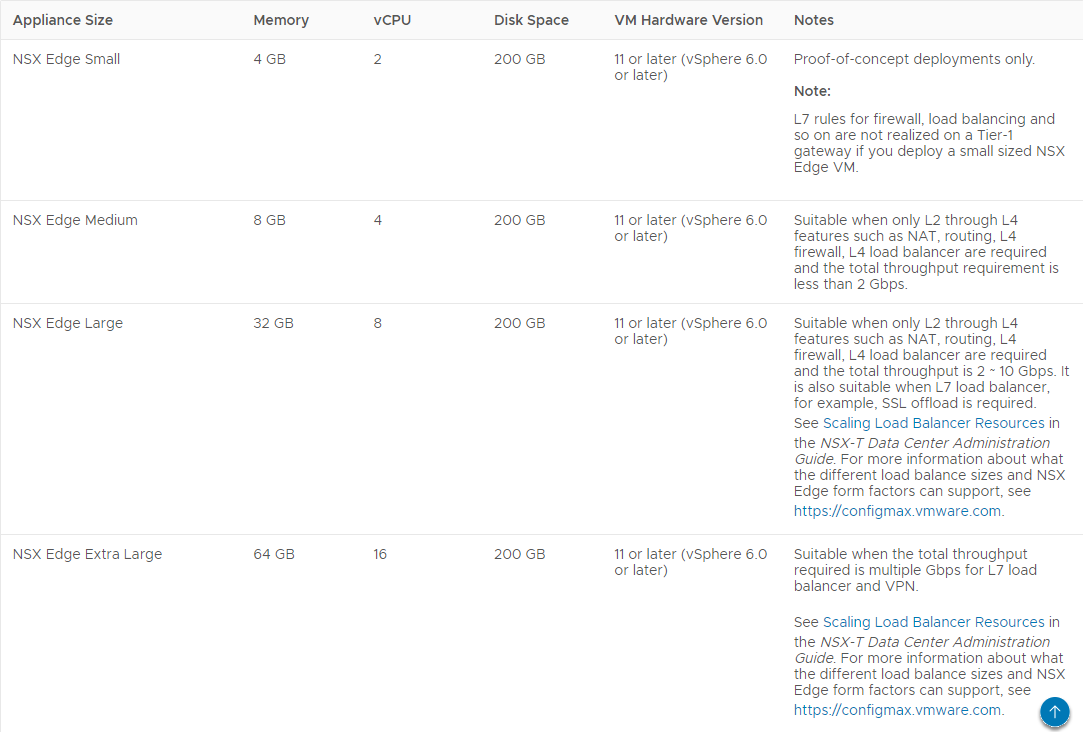
* **Trên trang Configuration**, chọn kích thước cấu hình triển khai (chi tiết bên dưới) > nhấp **Next**.
{% hint style="warning" %}
**Medium size** phù hợp với các trường hợp sử dụng thông thường. Nếu không có yêu cầu đặc biệt, vui lòng sử dụng cấu hình này.
{% endhint %}
**Kích thước cho VM NSX Autonomous Edge**
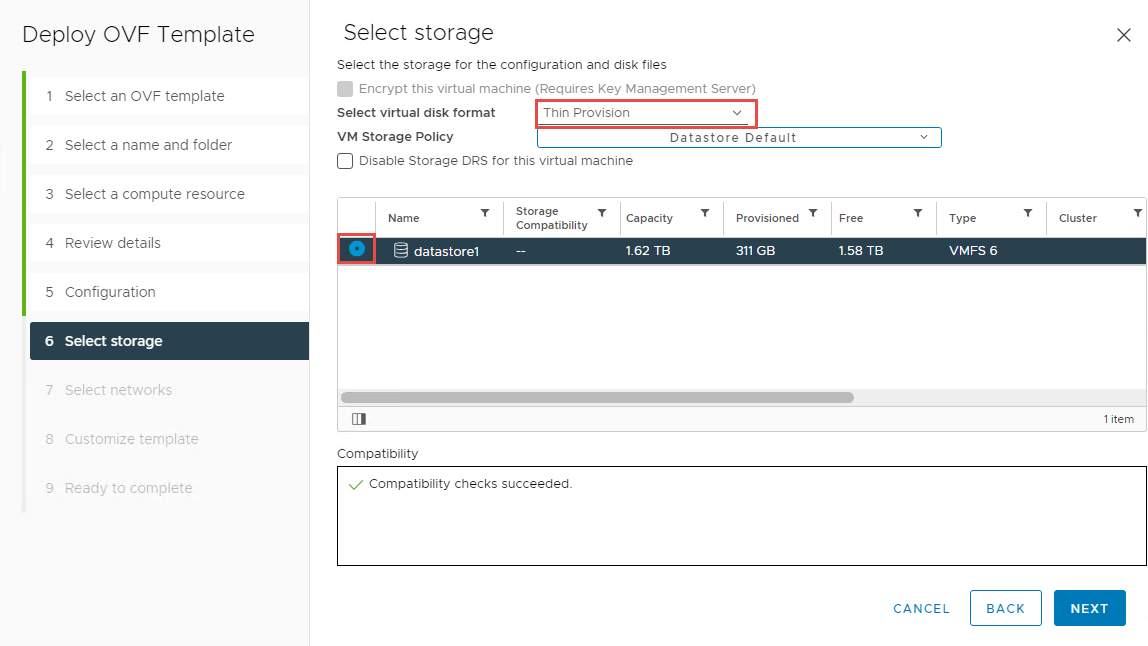
* Trên trang **Select storage**: chọn một datastore & chọn định dạng đĩa ảo = Thin provision > nhấp **Next**.
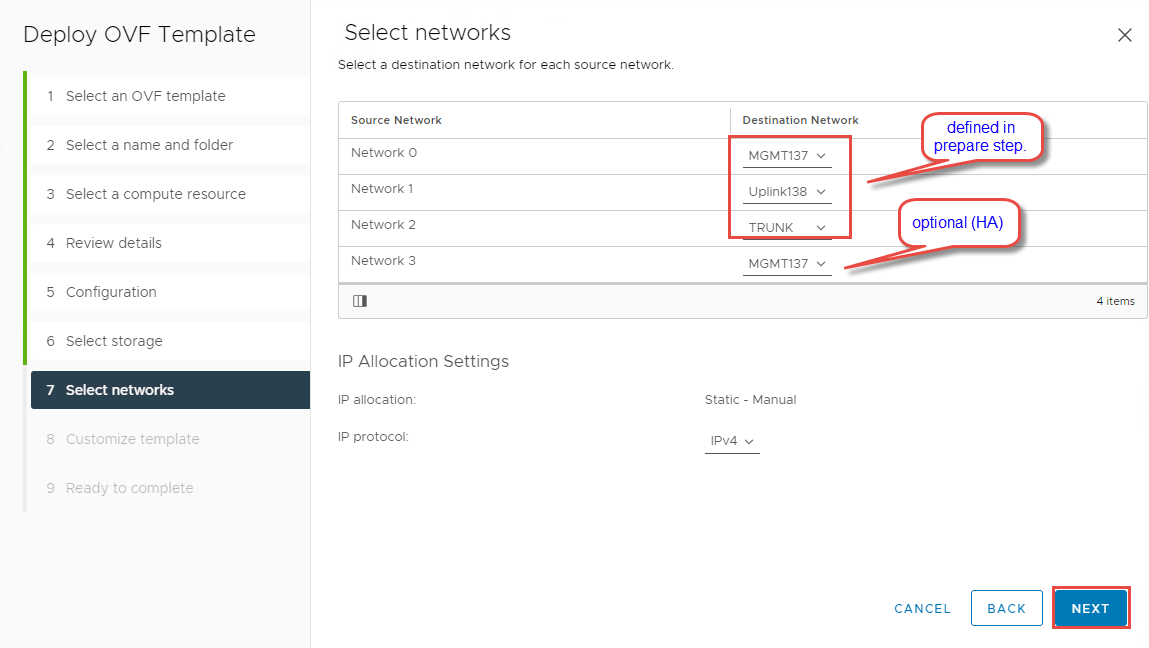
* Trên trang **Select networks**: đối với tất cả các mạng đích, hãy chọn management network > nhấp **Next**.
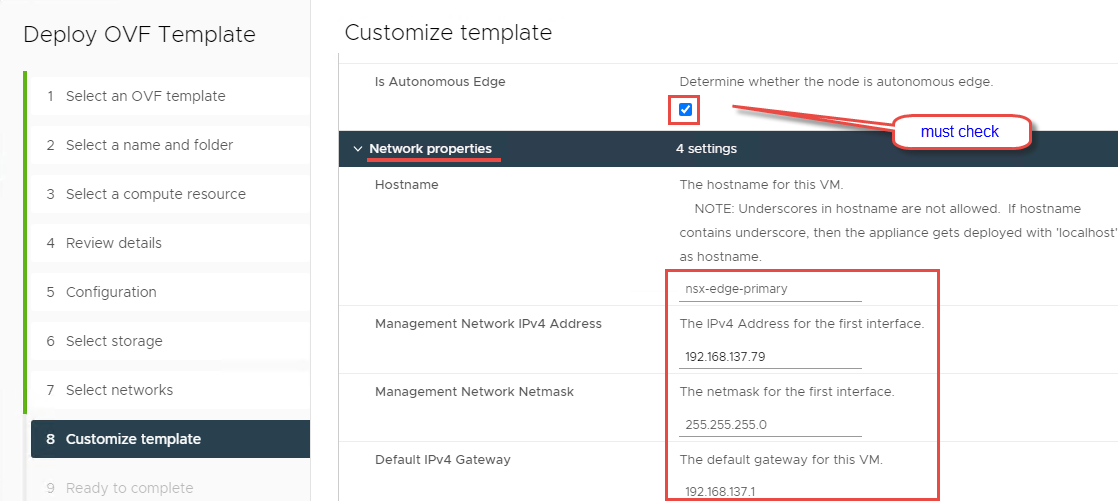
* Trên trang **Customize template**, nhập các thông tin sau > nhấp **Next**:
*+ Trong phần **Application**, thực hiện các bước sau:*
> Đặt mật khẩu cho **System Root User Password**.
>
> Đặt mật khẩu cho **CLI "admin" User Password**.
>
> Chọn hộp kiểm **Is Autonomous Edge**.
Để trống các trường còn lại.
{% hint style="warning" %}
Các dịch vụ cốt lõi của NSX Edge sẽ không khởi động nếu không đặt mật khẩu tuân theo các yêu cầu sau:
Ít nhất 12 ký tự.
Ít nhất một chữ cái viết hoa.
Ít nhất một chữ cái viết thường.
Ít nhất một chữ số.
Ít nhất một ký tự đặc biệt.
Ít nhất năm ký tự khác nhau.
{% endhint %}
*+* Trong phần **Network Properties**, thực hiện các bước sau:
> Đặt **Hostname**.
>
> Đặt **Management Network IPv4 Address** (địa chỉ IP quản lý cho autonomous edge).
>
> Đặt **Management Network Netmask** (độ dài prefix của Management network.
>
> Đặt **Default IPv4 Gateway** (cổng mặc định của Management network).
***+*** Trong phần **DNS**, thực hiện các bước sau:
> Trong trường **DNS Server list**, nhập các địa chỉ IP DNS, phân tách bằng khoảng trắng.
>
> Trong trường **Domain Search List**, nhập tên miền.
***+*** Trong phần **Services Configuration**, thực hiện các bước sau:
> Nhập danh sách máy chủ NTP trong trường **NTP Server List**.
>
> Nhập các máy chủ NTP, phân tách bằng khoảng trắng.
>
> Chọn hộp kiểm **Enable SSH**.
>
> Chọn hộp kiểm **Allow Root SSH logins**
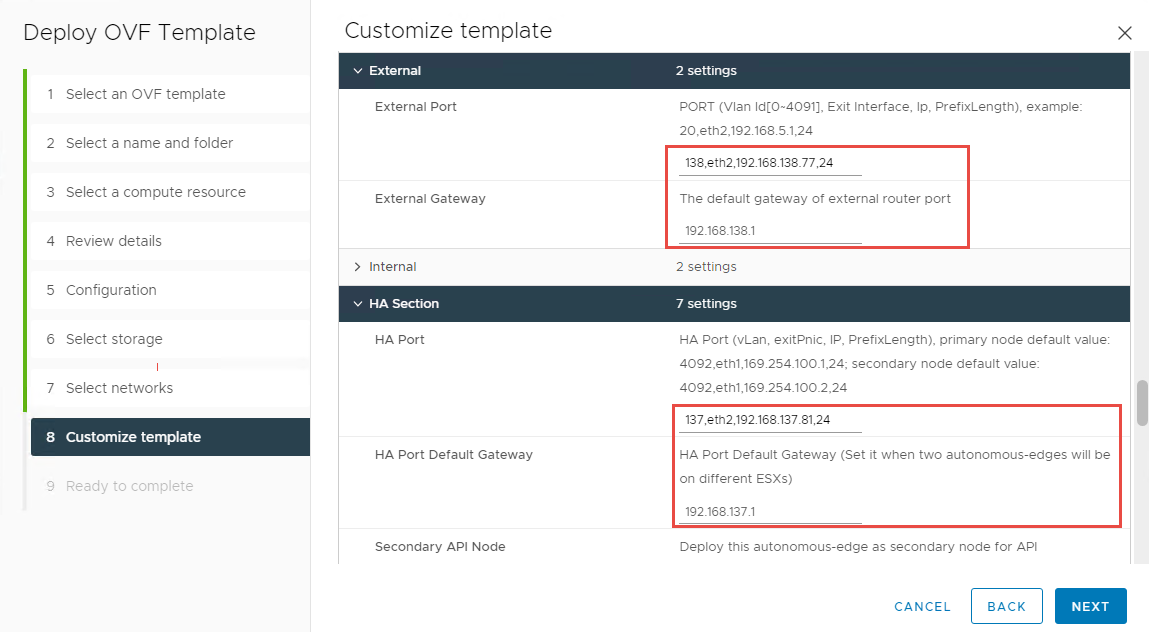
***+*** Trong phần **External**, thực hiện các bước sau:
Nhập chi tiết **External Port** theo định dạng: `VLAN_ID,Exit Interface,IP,Prefix Length`
Ví dụ: `138,eth2,192.168.138.77,24`. Thay thế các giá trị sau:
VLAN ID: ID VLAN của uplink VLAN.
Exit Interface: interface ID dành cho uplink traffic.
IP: Địa chỉ IP dành cho uplink interface
Prefix Length:Độ dài prefix cho mạng uplink.
Trong trường **External Gateway**, nhập default gateway của uplink network.
***+ (Tùy chọn)** Trong phần **HA**, thực hiện các bước sau:*
Nhập chi tiết HA port theo định dạng: `VLAN_ID,Exit Interface,IP,Prefix Length`.
Ví dụ: `137,eth2,192.168.137.81,24`. Thay thế các giá trị tương tự như sau.
VLAN ID: ID VLAN của uplink VLAN.
Exit Interface: interface ID dành cho uplink traffic.
IP: Địa chỉ IP dành cho uplink interface
Prefix Length:Độ dài prefix cho mạng uplink.
Trong trường **HA Port Default Gateway**, nhập default gateway của management network
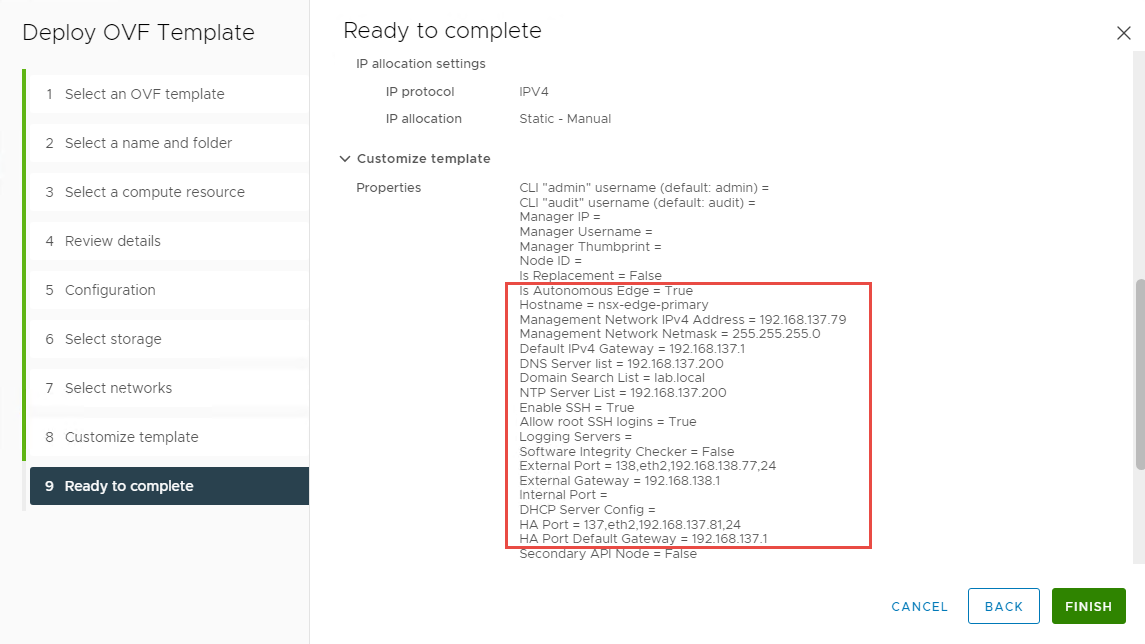
* Xem lại cài đặt NSX Autonomous Edge > trên trang **Ready to complete** > nhấp **Finish**.
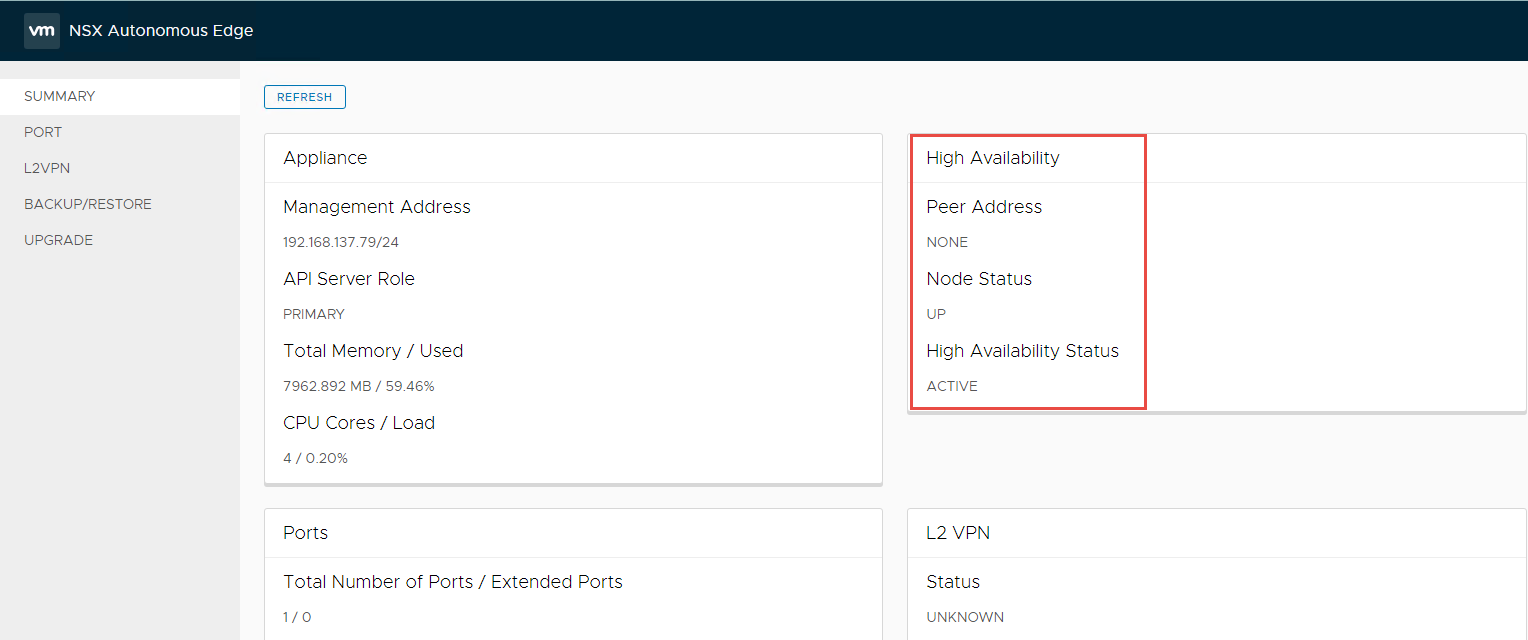
Sau khi hoàn tất triển khai, bật máy ảo NSX Autonomous Edge.
Đăng nhập vào NSX Autonomous Edge qua trình duyệt web.
{% endstep %}
{% endstepper %}
---
# Agent Instructions
This documentation is published with GitBook. GitBook is the documentation platform designed so that both humans and AI agents can read, navigate, and reason over technical content effectively. Learn more at gitbook.com.
## Querying This Documentation
If you need additional information that is not directly available in this page, you can query the documentation by asking a question.
Perform an HTTP GET request on the following URL with the `ask` and `goal` query parameters:
```
GET https://docs.higiocloud.vn/hi-gio-user-guide-vn/hi-gio-draas/stretching-layer-2-networks-cho-hi-gios-draas/trien-khai-nsx-autonomous-edge-on-premises-site-..md?ask=&goal=
```
`ask` is the immediate question: it should be specific, self-contained, and written in natural language.
`goal` is what the user is ultimately trying to achieve, the reason they need the answer. Sharing it helps GitBook give you a better, more relevant answer. A goal is most helpful when it describes the outcome the user wants rather than restating the question. For example, with `ask=how do I create an API token`, a goal like `automate deployments from our CI pipeline` lets GitBook tailor the answer to that use case.
The response will contain a direct answer to the question and relevant excerpts and sources from the documentation.
Use this mechanism when the answer is not explicitly present in the current page, you need clarification or additional context, or you want to retrieve related documentation sections.